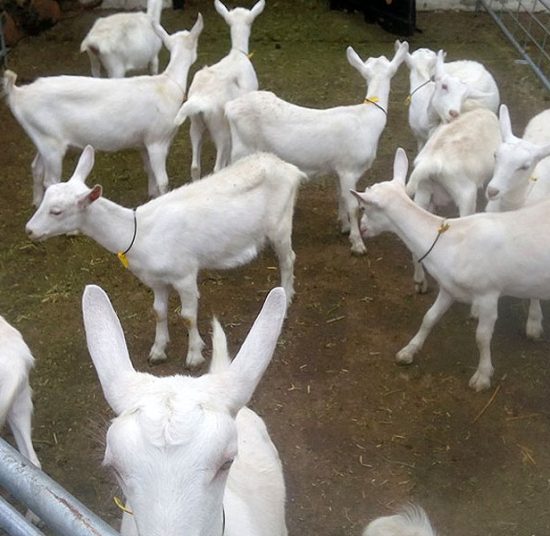
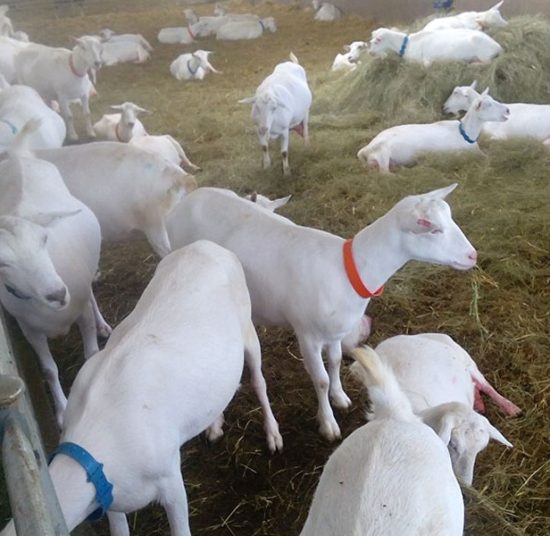
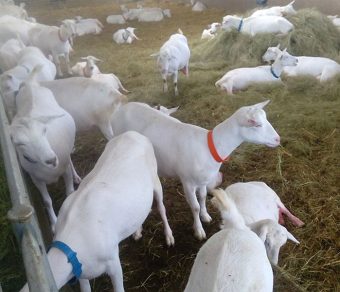
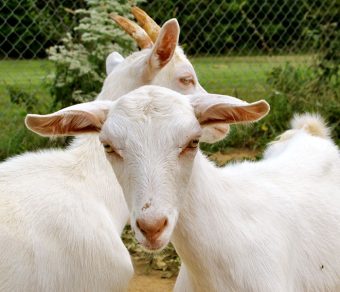
The Saanen goat is the most productive milk goat breed of Switzerland, which has the most productive milking goats in the world. The average milk yield is 838 kg in lactation of 264 days. The milk should have a minimum of 3.2% fat and 2.7% protein.
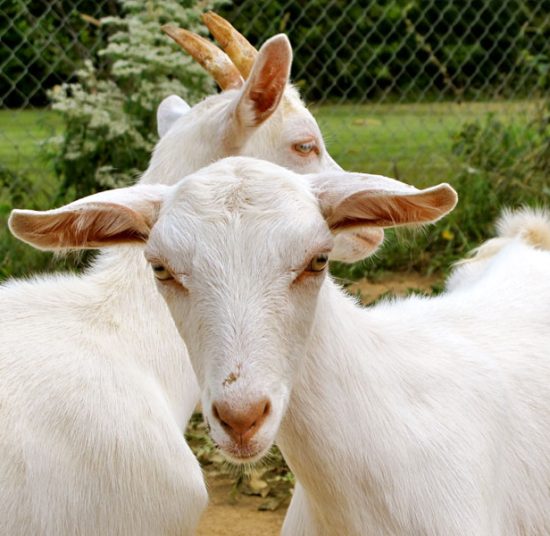
The Saanen is the largest breed of Swiss goat. Billies stand 90cm at the withers and weigh around 85kg. It has white skin and a short white coat. They may be horned or hornless, and tassels may be present. Their ears are erect and point upwards and forwards.
What Is The Saanen Goat Used For?
Of the different breeds, the Saanen dairy goat is the most widely distributed dairy goat in the world and is valued for its abundant milk production, hardiness, and calm, sweet nature. Pure white in color, Saanens are also one of the largest breeds of dairy goats. Due to their high milk production, they are often dubbed the “Holsteins” of the dairy goat world.
Typical Behavior & Temperament
Saanens are often described as being sweet, caring, and friendly. They have a calm nature and will get along with the rest of their herd. They will also get along with, and may even form a bond, with other farm animals and yard animals. They can also form bonds with human owners, too. Goats are pack animals: if they don’t have a pack of goats, they will adopt other animals and even humans as members of their group.
Advantages of Saanen Dairy Goats:
- They are among the top milk producers! Can give 4-5 Litres of milk per day
- Boast of high feed conversion Ration (FCR)
- They have a docile temperament hence easy to raise
- These girls are top achievers in cold climates such as winter!
- Hardy and resistant to many goat diseases and infections
- Have high reproductive efficiency! Most give birth to twins or triplets!
- They’re super-strong making them super-pack goats!
- Adapts well for either open-grazing or stall-feeding
Saanen Goat Shelter Needs
Goats are used to roughing it – they are hardy animals – but if you want to have a happy goat then you need to give them someplace to rest, especially Saanen goats with their fair skin. They need a dry, warm place to sleep with room to exercise. If you live in a warm climate, you need to make sure that they have a lot of shade.
Their skin is sensitive to the sunlight and it would not be a good idea to let them roam about without somewhere to shelter from the sun.
If you want to become a licensed dairy, there are very specific requirements that you will have to adhere to. If you just want to produce milk for personal use, then a simple shelter will be enough. Experienced breeders recommend at least 15 square feet of space per goat in the shelter. You will also need to fence them in if you do not want them to roam around your property.
Make sure that you provide the goats with plenty of clean bedding. Goats prefer hygienic conditions, so you will have to clean the shelter daily. Make sure that it is not too drafty for them and that there are no leaks that could cause them to become wet. They also need to feel safe and secure for optimal milking conditions, so do not build the shelter near a busy or noisy area.
Breeding the Saanen Goat
Saanen does reach sexual maturity at about 6 months of age, however, they should not be bred until they reach at least 9 months. While Saanens may be able to breed year-round, they tend to be more apt to breed in the fall.
If your doe is bred, you can expect to have kids in about 150 days. If you are using your Saanen for milk, any babies will need to be bottle-fed and removed from the doe.
What Is The Saanen Used For?
Of the different breeds, the Saanen dairy goat is the most widely distributed dairy goat in the world and is valued for its abundant milk production, hardiness, and calm, sweet nature. Pure white in color, Saanens are also one of the largest breeds of dairy goats. Due to their high milk production, they are often dubbed the “Holsteins” of the dairy goat world.
Typical Behavior & Temperament
Saanens are often described as being sweet, caring, and friendly. They have a calm nature and will get along with the rest of their herd. They will also get along with, and may even form a bond, with other farm animals and yard animals. They can also form bonds with human owners, too. Goats are pack animals: if they don’t have a pack of goats, they will adopt other animals and even humans as members of their group.
Advantages of Saanen Dairy Goat:
- They are among the top milk producers! Can give 4-5 Litres of milk per day
- Boast of high feed conversion Ration (FCR)
- They have a docile temperament hence easy to raise
- These girls are top achievers in cold climates such as winter!
- Hardy and resistant to many goat diseases and infections
- Have high reproductive efficiency! Most give birth to twins or triplets!
- They’re super-strong making them super-pack goats!
- Adapts well for either open-grazing or stall-feeding
Saanen Goat Shelter Needs
Goats are used to roughing it – they are hardy animals – but if you want to have a happy goat then you need to give them someplace to rest, especially Saanen goats with their fair skin. They need a dry, warm place to sleep with room to exercise. If you live in a warm climate, you need to make sure that they have a lot of shade.
Their skin is sensitive to the sunlight and it would not be a good idea to let them roam about without somewhere to shelter from the sun.
If you want to become a licensed dairy, there are very specific requirements that you will have to adhere to. If you just want to produce milk for personal use, then a simple shelter will be enough. Experienced breeders recommend at least 15 square feet of space per goat in the shelter. You will also need to fence them in if you do not want them to roam around your property.
Make sure that you provide the goats with plenty of clean bedding. Goats prefer hygienic conditions, so you will have to clean the shelter daily. Make sure that it is not too drafty for them and that there are no leaks that could cause them to become wet. They also need to feel safe and secure for optimal milking conditions, so do not build the shelter near a busy or noisy area.
Breeding the Saanen Goat
Saanen does reach sexual maturity at about 6 months of age, however, they should not be bred until they reach at least 9 months. While Saanens may be able to breed year-round, they tend to be more apt to breed in the fall.
If your doe is bred, you can expect to have kids in about 150 days. If you are using your Saanen for milk, any babies will need to be bottle-fed and removed from the doe.
Full Blood Saanen Milk Goats
The Saanen goat is a Swiss breed named after the Saanen valley in Switzerland. They are renowned for their high milk production and are popular in many parts of the world, including South Africa.
The colour of the Saanen is white with no markings, although black spots on the nose, eyelids and ears are an advantage in differing from the undesirable albino. The only drawback to the fair-skinned Saanen is that the harsh South African sun causes skin carcinomas of the udder, while the Toggenburg and British Alpine do not have this problem.
The present-day Saanen in South Africa originated from one male and one female imported from Germany in 1923, as well as from other importations from Switzerland, England and Germany between 1923 and 1976. These goats had been bred by careful selection for many centuries in their country of origin but, unfortunately, no official attempt was made to keep them pure in South Africa.
In 1947 when a Mr PR du Preez wanted to make a fresh start with registered goats. The only breeder with registered goats at the time owned only two females. Mr. du Preez bought one of them and had to import a male from England to serve this female, as there were no others available. From 1958 to 1985, the SA Stud Book and livestock Improvement Association (SASBLIA) registered 2388 Saanen females and 530 Saanen males, whilst 139 females and 42 males were registered from 1985 to 1991.