Bonsmara Cattle Breed: Facts, Uses, Origins & Characteristics
Quick Facts about Bonsmara
| Breed Name: | Bonsmara |
| Place of Origin: | South Africa |
| Uses: | Beef production, crossbreeding, stud breeding |
| Bull (Male) Size: | Up to 1,763 pounds |
| Cow (Female) Size: | 1,102–1,212 pounds |
| Color: | Red or brown |
| Lifespan: | 15–20 years |
| Climate Tolerance: | Hot, humid conditions |
| Care Level: | Moderate |
| Production: | High beef production; cows are still productive at 10-years old |
| Crossbreeding: | Bonsmara cattle are the top choice for crossbreeding programs in South Africa |
Bonsmara Characteristics
The Bonsmara represents the best characteristics of the British and Afrikaner breeds. Professor Bosma used a methodical approach combined with scale photography to document multiple traits of every species in his experiments.
Bonsmara are popular around the world because of their friendly temperament. They interact well with humans, and the cows are exceptional mothers. Mothers provide milk to their young with high butterfat content to help them grow fast in harsh grasslands and sub-tropical landscapes.
Calves mature quicker than Afrikaner breeds and are ready to breed when they’re 12–18 months old. A critical advantage of the breed, when compared to other cattle, is its success in birthing. Bonsmaras experience fewer birthing issues, and the cows have a low mortality rate.
The Bonsmara Cattle Breeders’ Society oversees all breeding programs in South Africa, and it uses scientific selection procedures, called the Bonsmara system, to help breeders maintain elevated production levels. The society established the standards for the breed, which include:
Calving intervals cannot exceed 790 days.
- Heifers must give birth before they reach 39 months of age
- Cows cannot ween more than two calves with indexes below 90
-
Cows must raise at least two out of three consecutive calves.
These strict breeding standards have helped the Bonsmara become one of the most trusted and successful breeds for meat production, crossbreeding, and stud-breeding.
Uses
Bonsmara cattle are primarily used for beef production, and they’re adaptable to feedlots and grazing lands. Whether it’s produced from grazing or feedlots, Bonsmara beef has excellent marbling, a high dressing percentage, and a consistent fat disposition. Unlike British Cattle, Bonsmara are not susceptible to tick-borne diseases, and this disease resistance has made the Bosnmara a top choice for crossbreeding programs. Since it was created with three cattle breeds, the Bonsmara is a popular choice for improving the production and hardiness of other species used in South Africa.
-
Appearance & Varieties
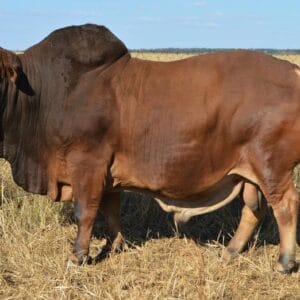
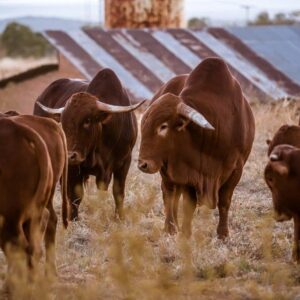
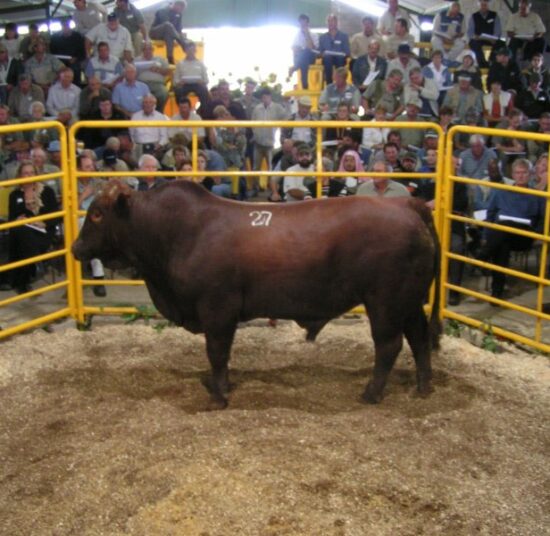
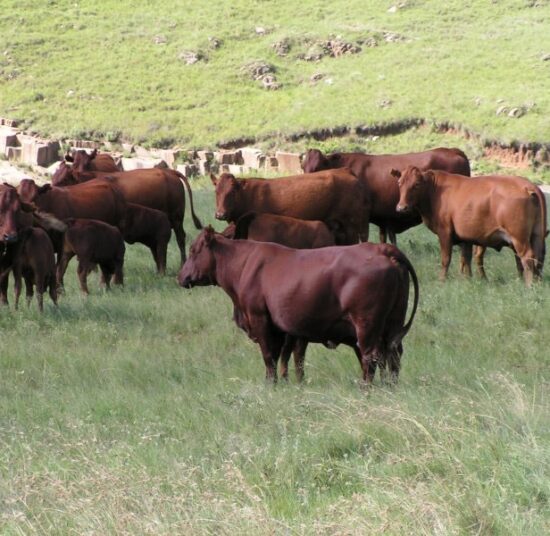
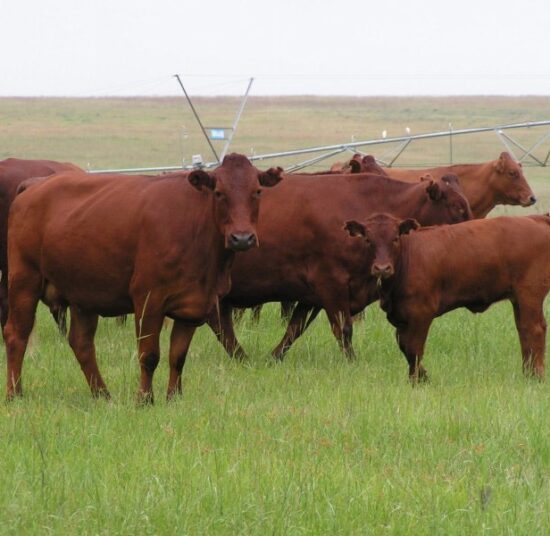
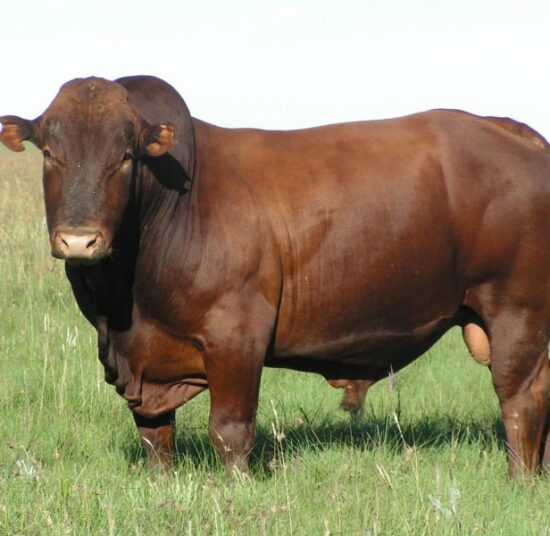
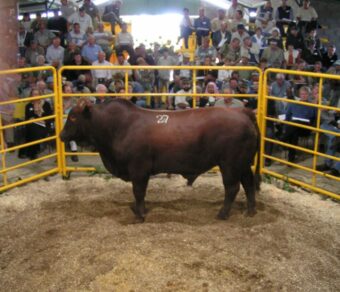
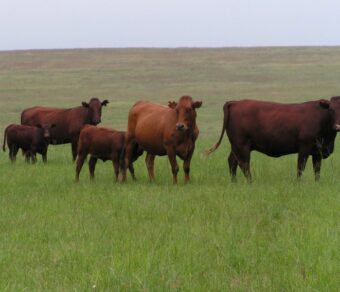
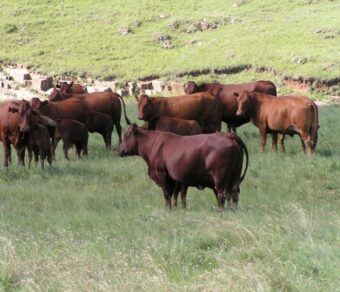
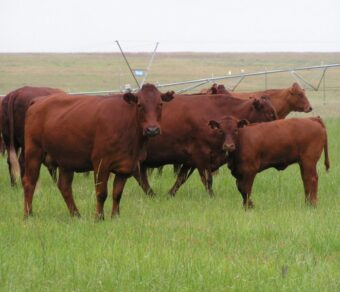
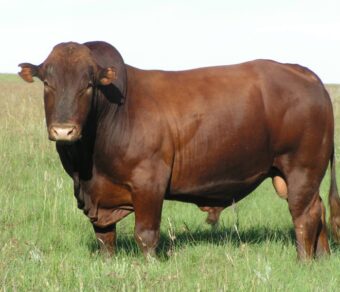
With a red or brown coat, broad head, convex profile, and smooth, oily coat, the Bonsmara is perfectly adapted to the scorching climate of South Africa. Although the cattle have horns, they’re removed to conform with the breed standard. When Bosma experimented with different breeds at the Mara Research Station, he discovered that the broader heads of Afrikaner cattle allowed them to cool off more efficiently than animals with narrower heads. The Bonsmara’s massive head and wide nostrils are advantages in hot climates, and they help the breed control respiration and prevent the brain from overheating on scorching days.
Bonsmara are three-composite cattle which means they were developed with three breeds: the Afrikaner, Hereford, and Shorthorn. Using three-composite breeds in crossbreed programs is an effective method of improving the health and characteristics of other cattle. African cattle farmers use the Bonsmara to enhance these breed.
Red Poll
Sussex
Shorthorn
Afrikaner
Holstein
Hereford
Germany Red
Braunvieh
Senepol
TuliAre Bonsmara Good for Small-Scale Farming?
Bonsmara are hardy cattle that can tolerate harsh conditions and resist disease-carrying ticks, but they are not suitable for small-scale farming. The Bonsmara Cattle Breeders’ society recommends that farmers should not raise fewer than 20 cattle because smaller herds allow for fewer genetic improvements in the breed. However, the Bonsmara is an excellent choice for owners of large farms with ample grazing land.