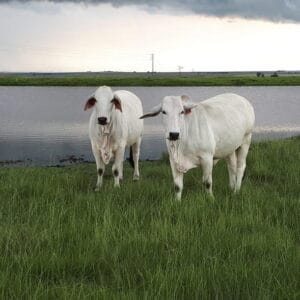


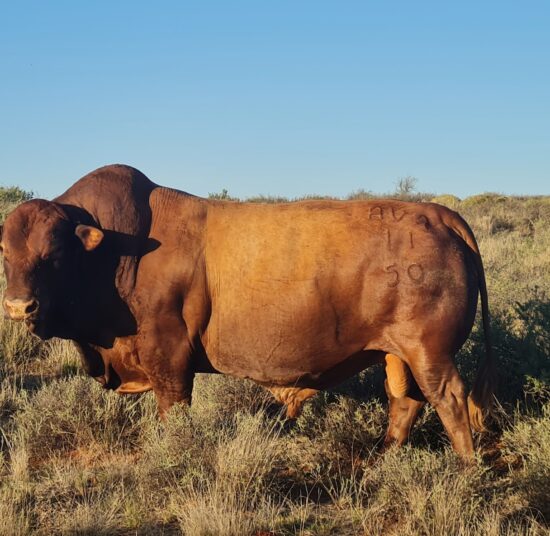
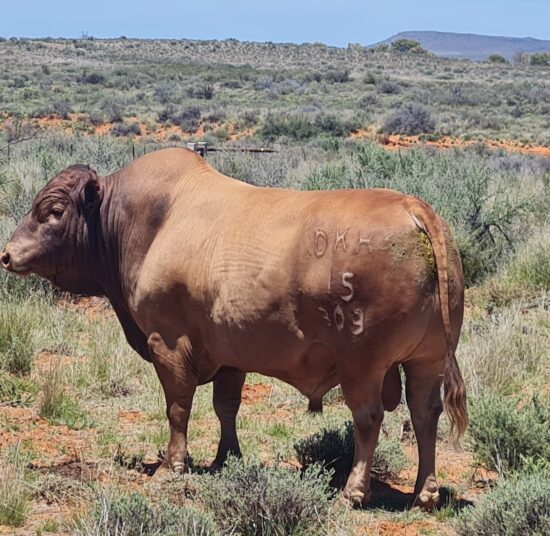
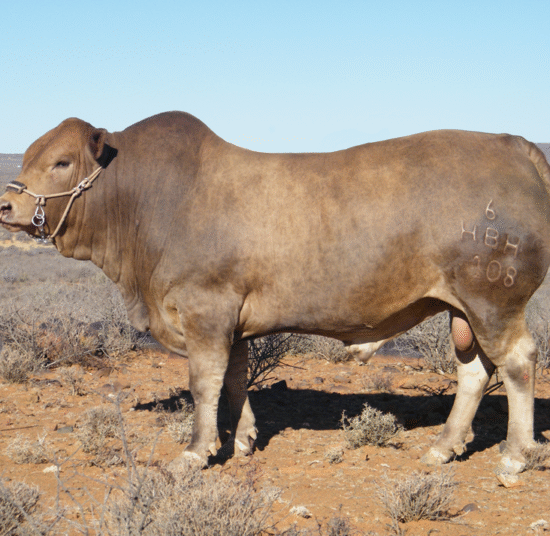
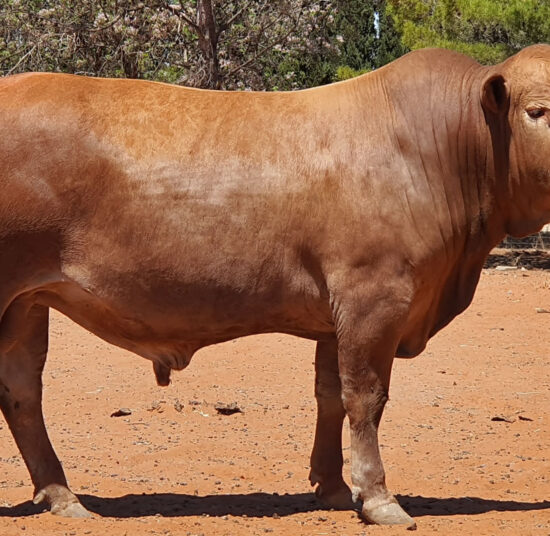





Tuli Cattle – The Intelligent Choice
Towards the end of 1976 the first Tulis, a group of thirty pregnant females and three bulls, were imported into South Africa from the T.B.S in Zimbabwe. The importers were the Bornmann family and a relation by marriage, Dr Fanie Kellerman. Dr Kellerman, a veterinarian, had at one stage worked in Zimbabwe where he had become aware of Tuli cattle and had been sufficiently impressed to want to import them. The first Tulis were introduced to the South African public at agricultural shows. Information days and prestige auctions were held and gradually the Tuli made its mark in South Africa too. The Tuli Cattle Breeders Society was officially formed on 24 March 1994 having been preceded by a Tuli Club. In 2013 there are about 72 Tuli Breeders with just over ±8400 live animals registered at SA Studbook.
Distribution Tuli Cattle
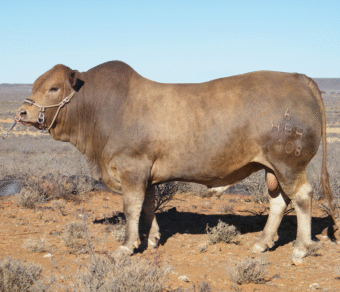
The Tuli is eminently suited to extensive ranching systems. It has the unique ability to utilise even the worst quality grazing and still produce top quality meat. The amazing adaptability of the Tuli is self evident if one considers their distribution. Tulis can be found flourishing in sandy, semi desert areas in Namibia, Botswana and the Northern Cape; in hot heartwater bushveld areas such as Zimbabwe, Limpopo Province and the Lowveld of Mpumalanga; in the high rainfall, sourveld of high altitude Mpumalanga and Natal where redwater and gallsickness is rife; in the Drakensberg Mountains where snow falls regularly; on the extensive savannah grassland of the Free State; in the arid Karoo with it.s unique scrub bush; in the cold, misty mountains as well as the coastal bush of the Eastern Cape. Today there are also Tulis in Australia, Canada, the USA, South America and in tropical Zambia.
Attributes
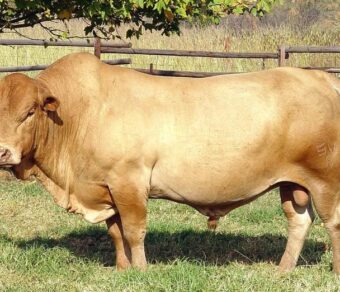
The Tuli is indigenous to Southern Africa with hardiness and adaptability bred into it through a process of natural selection over a period of at least two thousand years. In recent times attributes of economic value have been the aim of scientific selection and have given us the modern Tuli. In female animals the accent has been on fertility, milk production and low calf mortality while in bulls it has been growth, feed conversion and carcass quality. Great care has always been taken not to compromise the natural hardiness and adaptability of the breed. The Tuli developed in relative isolation and has a unique genetic make up which makes it particularly successful in cross breeding programs – not only is a high degree of hybrid vigour achieved but a large percentage of polled calves as well. Tuli steers and Tuli-cross calves finish faster off the veld than many other breeds.
Conformation of visual appearance as well as performance of the Tuli is monitored and enforced through the Tuli Breed Standards of Excellence.
Looking for exceptional cattle for sale? GreenhillCountry Farm is proud to supply robust, well-nourished cattle for both cattle farming and breeding purposes. Our cattle are raised with top-notch care, focusing on their health, genetics, and adaptability to various farming conditions.